Surgical decision support for AvailOrtho
Computer vision over DICOM studies, supporting orthopaedic surgical planning and intraoperative guidance.
- Client
- AvailOrtho
- Location
- Boston, United States
- Industry
- Healthcare and MedTech
- Project type
- Surgical decision support
- Status
- In production
- Result
- Decision support the surgeon stays accountable for.
The client
AvailOrtho is an orthopaedic practice in Boston. Preoperative planning and intraoperative guidance both start from imaging, and both are judgment calls made by a clinician who is accountable for the outcome. That accountability is the design constraint, not a disclaimer added to the end of one.
The challenge
Preoperative planning and intraoperative guidance depended on how carefully each surgeon read each study.
Objectives
- Support planning and guidance from the imaging that already exists.
- Keep every output traceable to the image it came from.
- Leave the clinical decision, and the accountability for it, with the surgeon.
Built on AI Healthcare, a platform we own and operate rather than resell.
What we built
Computer vision over DICOM studies, surfacing measurements and structure to support preoperative planning and intraoperative guidance.
The boundary was drawn before the build rather than argued afterwards. The system presents; a person decides. Nothing it produces is a recommendation the practice cannot open up and check against the source image.
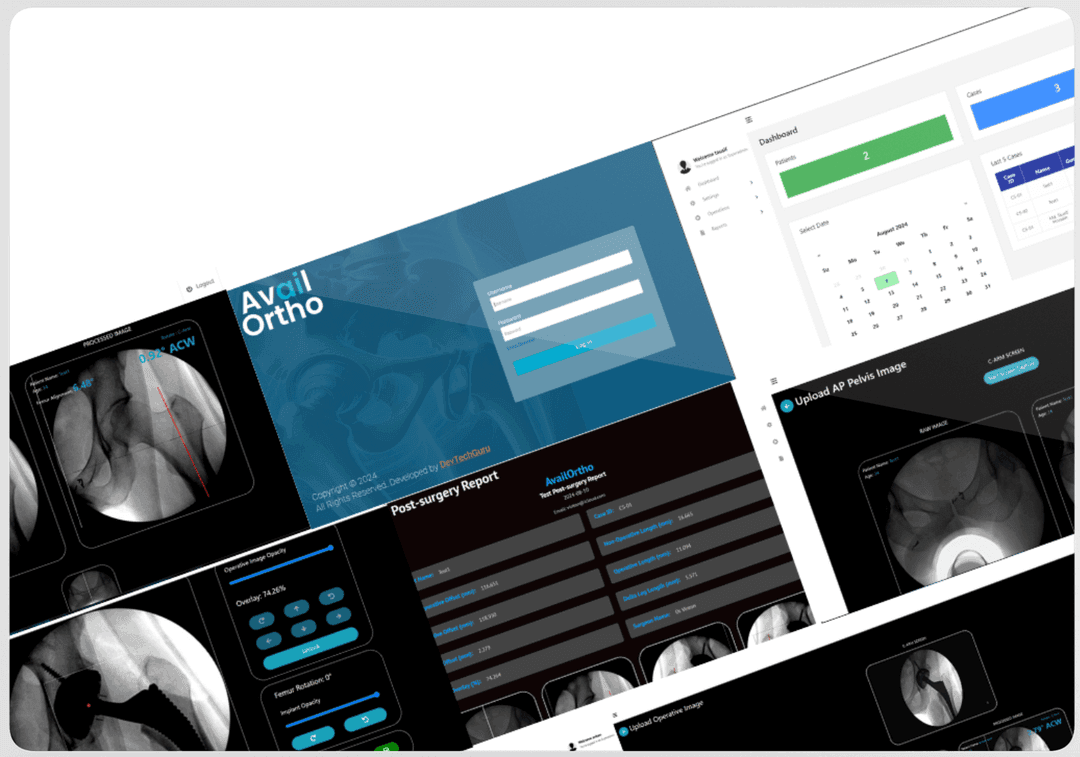
What it does, in production.
DICOM study ingestion
Works from the imaging the practice already produces, in the format it already produces it in.
Structure and measurement
Computer vision over the study, surfacing what the plan depends on.
Traceability
Every output resolves back to the image and the region it was derived from.
Preoperative planning
Support for the plan the surgeon builds, not a plan generated in place of one.
Intraoperative guidance
The same record, available at the point the decision is actually made.
Clinician in control
No automated clinical decision, no silent override, no output the surgeon cannot dismiss.
The shape of the system.
A model belongs where the decision repeats, the data already exists, and being wrong is recoverable. Two of those three are true here and the third is not, which is precisely why the system stops at support and the human boundary is drawn in the architecture rather than in the interface copy.
The integration map, the data model and the deployment topology are covered in technical review under NDA rather than on a public page. The shape of the system is described here; the detail is a conversation, not a download.
How it was delivered.
The clinical constraint was settled first and the model followed from it. A system that reads an image and proposes an action is a different regulatory and engineering object from one that reads an image and shows a clinician what it found.
Architecture was written down and signed by a named engineer before the build. Release approval and production sign-off are people, not pipelines. See how we use AI in delivery.
Engineering challenges
Traceability as a hard requirement
A measurement a clinician cannot resolve back to a region of a specific image is not usable in this setting, whatever its accuracy. That requirement shapes the data model, not just the interface.
Knowing where the model stops
The hardest decision on this engagement was what the system would refuse to do. Deciding it up front is cheaper than discovering it in a review.
What changed.
- Decision support the surgeon stays accountable for.
- The system is in production and we are still the ones supporting it.
No accuracy figure, no sensitivity or specificity number, and no claim about clinical outcome appears on this page. Those are claims that need a study, a method and a date, and publishing one without all three would be the most damaging kind of overclaim available to a company working in healthcare.
Engagements next to this one.
You do not need to arrive with a perfect technical specification.
Start with the problem. Tell us what is slowing the business down, what you want to build, or where the current system is failing. We will tell you the shortest path forward, including when that path is not us.
Start your build