From the till to the back office, on one system.
Sales, inventory, staff and customer data on one platform, usable by frontline staff on their first shift and controlled by management from the back office.
What is hard about this sector, before anybody writes software.
If a line below would still be true had we never worked in this sector, it is not specific enough to be on the page.
The counter and the back office reconcile by hand
Takings, stock and staff records are matched up afterwards by somebody with a spreadsheet.
Training cost per hire
High turnover on the front line means every hour of training is a recurring cost, not a one-off.
Stock that is only right at stocktake
The system knows what was sold and not what was wasted, returned or moved between branches.
Every branch is slightly different
Local pricing, local promotions and local habits, with head office needing one view of all of it.
Capabilities, in the order they matter.
Front-of-house transactions and back-office control on one platform, usable by staff on their first shift.
Point of sale
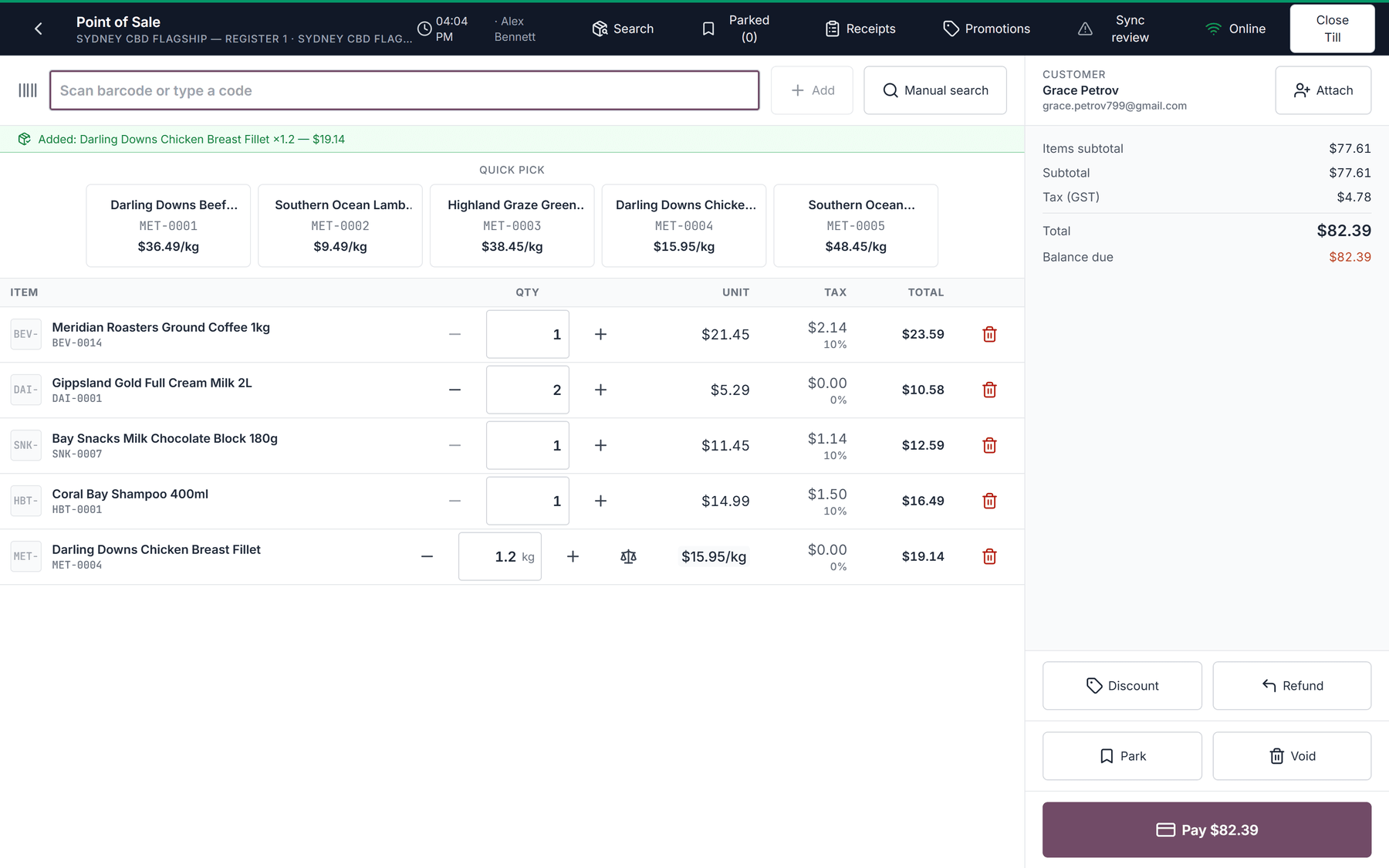
A basket that handles weighed items, per-line tax and an attached customer without slowing the queue down.
Payments
Multiple tenders on one docket against a balance that falls to zero, with change calculated as it goes.
Inventory
Stock moved by sales, receipts, wastage and transfers, on the same ledger the ERP reads.
Customer management
A member attached to the sale before it is tendered, so the history is built by the transaction.
Multi branch
Local operation with a single head-office view, filtered by location and by cashier.
Reporting
Gross sales, refunds, tax collected and payment mix the morning after, which is what a bank settlement gets checked against.
Systems running in this sector.
Derived from the engagement record, so this section cannot list work that is not in it.
RetailBangladesh
A service retail group
Guru POS on the same codebase as Guru ERP, so the till opens from the ERP dashboard rather than a second sign-in.
Retail
Classic Cut Boutique Salon
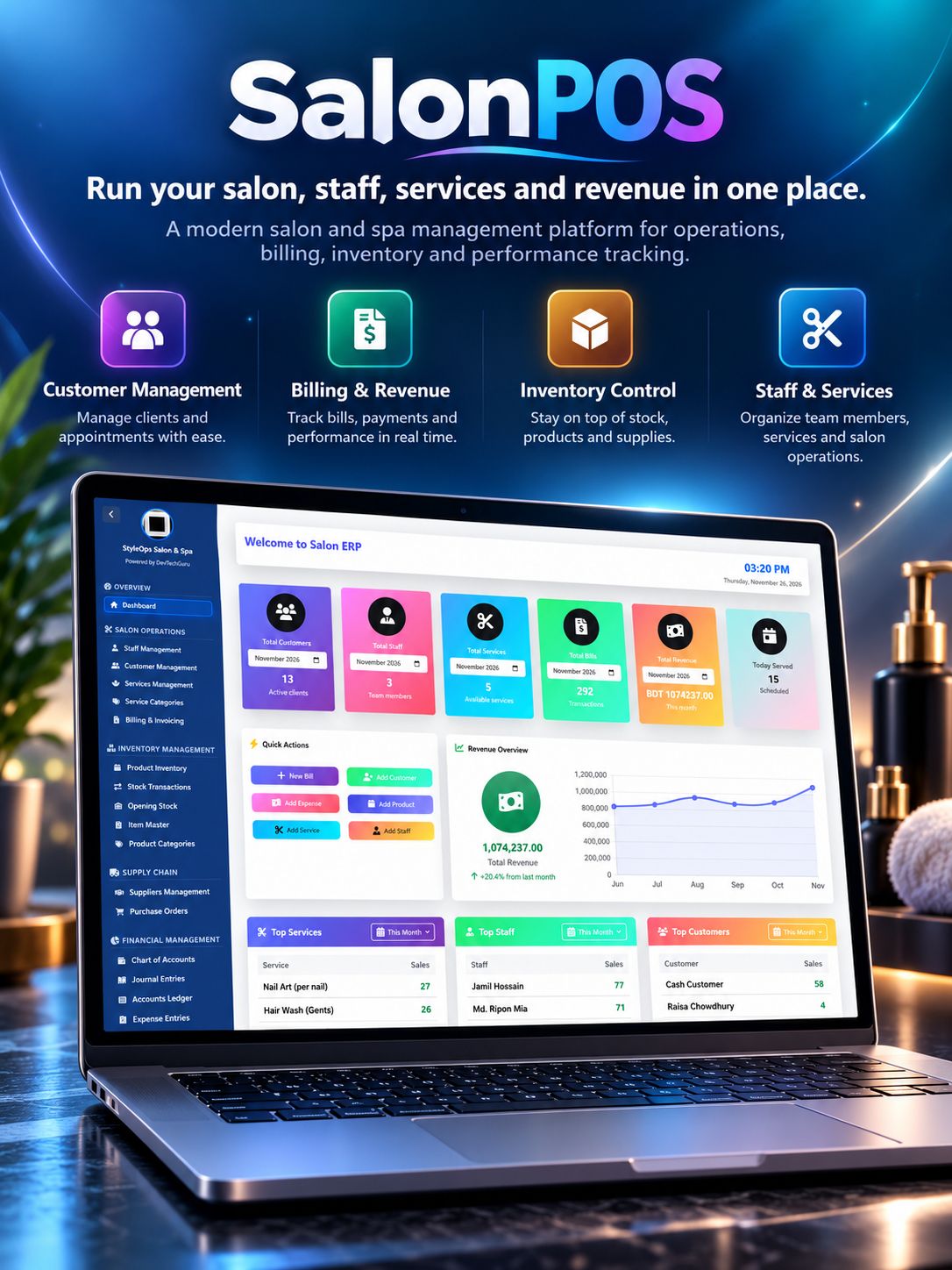
Salon POS running haircuts, treatments, beauty services and product sales through one connected system.
What changes about security in this sector.
The exposure at a till is the operator, not the network: staff discounts, voids and refunds are where money leaves a retail business quietly. Those are permissioned actions attached to a named user and reportable by user, which is the control that actually matters at a counter.
DevTechGuru holds no security or industry certification, and no page on this site claims one. Where a regime applies it is named as your obligation and as a design constraint we build inside. Ownership, handover and AI governance covers what a procurement reviewer usually asks next.
Technology
- Frontend
- ReactTypeScriptNext.jsDesign systems
- Backend
- PythonDjangoFastAPINode.js
- Data
- PostgreSQLMySQLRedisData modelling
- Cloud
- AWSDockerCI/CDInfrastructure as code
Questions we get asked.
Questions this sector asks that the others do not.
Can we try the point of sale before committing?
Yes. A public demo tenant runs Guru POS and Guru ERP on generated data with the credentials printed on the product pages, and it resets overnight so you can change anything in it.
Does the POS work if the internet drops?
That is the first question we will ask you rather than the first thing we will promise, because the correct answer depends on what your business does when a sale cannot be recorded. It is a design decision made before the build, with a written rule for how the till and the server reconcile afterwards.
Where to go next
You do not need to arrive with a perfect technical specification.
Start with the problem. Tell us what is slowing the business down, what you want to build, or where the current system is failing. We will tell you the shortest path forward, including when that path is not us.
Start your build